Dear Colleagues,
As we leave behind 2024, we reflect on a year filled with progress, collaboration, and shared achievements across the industrial gases sector. Your unwavering commitment to safety, sustainability, and innovation continues to inspire us as we navigate an ever-evolving industry landscape.
The European Industrial Gases Association extends its heartfelt gratitude to each of you for your contributions and engagement this year. Together, we have tackled challenges, celebrated successes, and set the groundwork for an even brighter future.
As we look forward to 2025, EIGA remains dedicated to supporting our members, advocating for our industry's pivotal role in achieving Europe's climate and economic goals, and fostering a culture of safety and excellence.
EIGA is the safety authority in the sector of industrial gases, so it is from the depth of our heart that we wish you a happy and healthy new year! May the new year bring continued success, opportunities for growth, and strengthened partnerships. |
|
|
|
In 2024, the European Industrial Gases Association made significant strides in promoting safety, sustainability, and industry collaboration. Key Events and Summits EIGA hosted two major events: Winter Summit 2024: Held from January 23 to 25 in Antwerp, this summit emphasized the industrial gases sector's pivotal role in ensuring a safe and sustainable hydrogen future. Summer Summit 2024: Conducted in Prague on May 30 and 31, the event was an opportunity to celebrate the best practices of our sector and to reward the winners.
EIGA was also a speaker at several events throughout Europe and the world.
Publications and Safety Initiatives Throughout the year, EIGA released several critical documents: 79 in total - thanks to our 350 experts who met at least 58 times at the EIGA office, but also abroad or online. This does not account for the meetings with other stakeholders, partners and official bodies. To achieve this impressive work, we estimate that our experts - and the EIGA staff - consumed around 8000 treats (chocolates or biscuits). We were unable to count the litters of coffee!
Advocacy and Strategic Initiatives In September, EIGA unveiled a white paper titled "The Industrial Gases Sector is Essential for a Net Zero and Resilient European Economy." This document underscored the industry's commitment to Europe's climate goals and the vital role of industrial gases in achieving a carbon-neutral future.
Additionally, EIGA joined forces with 16 other industry associations to provide recommendations to the European Commission on the certification of low-carbon fuels, advocating for a clear regulatory framework to support the hydrogen economy's growth.
EIGA had about 10 bilateral meetings with EU Officials.
Training and eLearning To bolster industry knowledge and safety practices, EIGA expanded its eLearning offerings. Notably, a module on Hydrogen Emergency Response was made available, reflecting the industry's focus on hydrogen safety amid Europe's ambitious climate objectives.
In summary, 2024 was a year of proactive engagement and development for EIGA, marked by significant events, essential publications, strategic advocacy, and enhanced training resources, all aimed at advancing safety and sustainability within the industrial gases sector.
Philippe Cornille
Secretary General |
|
|
|
Welcome to the new President of EIGA |
|
|
|
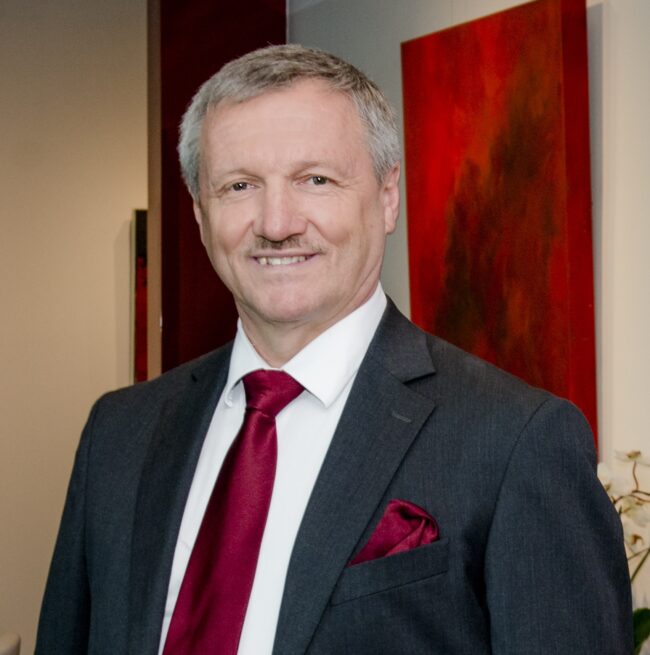
Adolf Walth
Adolf Walth started at Messer in 1988. Since then, he has held various sales positions and was appointed as Managing Director at Messer France in 1998. From 2001 to 2008 he took over the responsibility for all the Western European countries of Messer. From 2008 until today Adolf Walth is Executive Vice President Sales and Marketing.
|
|
|
|
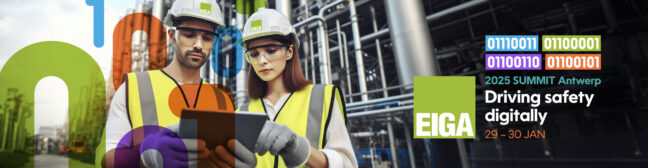
Driving safety, digitally |
|
|
|
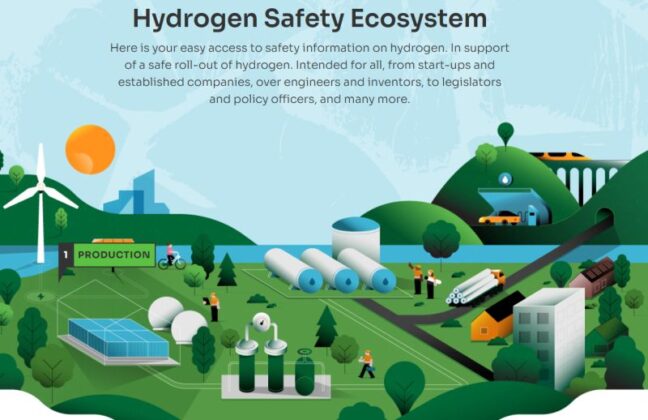
European Hydrogen Safety Panel
Jan Strybol, Deputy Secretary General of EIGA, has been nominated as one of the few experts in the European Hydrogen Safety Panel (EHSP), which belongs to the Clean Hydrogen Joint Undertaking (JU).
The EHSP was launched in 2017. It?s mission is:
- to assist the JU at programme and project levels, and beyond, in assuring that hydrogen safety is adequately addressed and managed;
- to promote and disseminate hydrogen safety knowledge and culture within and outside of the JU's programme.
As hydrogen safety is an active area of research that supports the implementation and operation of hydrogen systems, the EHSP provides the Clean Hydrogen JU with a unique, practical and direct access to state-of-the-art expert judgment for all issues regarding hydrogen safety. It improves the transfer of safety knowledge across project boundaries and establishes a consistent communication about safety performance.
|
|
|
|
Transport of dangerous goods
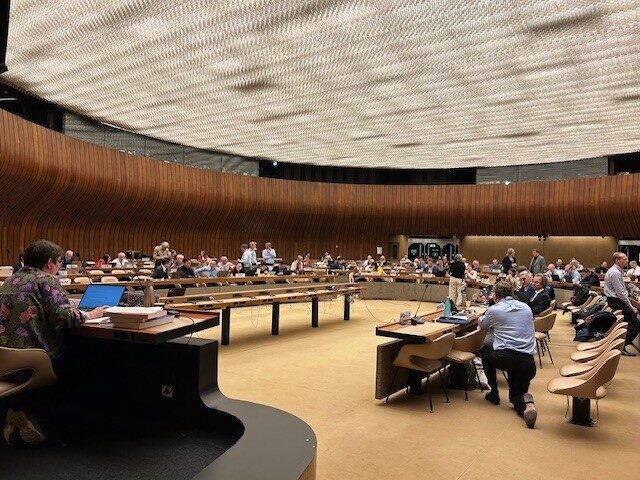
As every year, EIGA attended in Geneva the UN Sub-Committee of Experts on the Transport of Dangerous Goods.
With a full agenda, our paper ST/SG/AC.10/C.3/2024/59 was delayed till end of the week before we could defend it.
The issue is important for our members because many acetylene cylinders have simply no more space left for additional marking as is required by the UN Model Regulations.
While there was general support on the proposal, some authority experts stated a preference for a regular text instead of a note in case the intent was a permanent solution and not a transitional measure.
Furthermore, it was stated by some experts that, where possible, the required marking should be applied and that only for cylinders where the additional marking cannot be applied, an allowance should be given to not apply the marks.
EIGA took these comments into account in their 3rd version of the paper, and this time it was adopted!
For the experts amongst you, here is the new UN text:
6.2.2.7.3 In (k) and (l), at the end, add the following new paragraph:
?Acetylene cylinders constructed in accordance with the Model Regulations annexed to the twenty-first revised edition of the Recommendations on the Transport of Dangerous Goods may continue to be used without the application of the marks detailed in (ii) and (iii) when the marking can neither be applied on the cylinder shoulder nor applied on any neck ring.?
EIGA WG-1 also produced a new Training Package, TP 66 - ADR 2025 - Main Changes Linked to Class 2 Transport.
This Training Package is intended for all who are involved in the use of ADR, and in particular those who are responsible for communicating the changes to ADR within their organisations. It should be noted that this Training Package is intended as an overview of the changes as they relate to the gases industry and that it should be used in conjunction with the 2025 edition of ADR.
|
|
|
|
Great support from the Italian National Gas Association
In March 2023, Assogastecnici wrote to the Ministry of Health to highlight the disparity in treatment existing between 99.5% medical oxygen and on-site production medical oxygen in terms of regulation and the association asked for a joint study of the matter. In response to this request, in May 2023 the Italian Ministry of Health established the "Technical Table on self-production systems for oxygen", in which the President of the Assogastecnici Medicinal Gases Group, Marco Tonini (SAPIO), was appointed. The table was formally launched in 2024 and has seen several meetings, involving representatives of the Ministry of Health, on-site system manufacturers, Assogastecnici, and hospital pharmacists. The aim is to develop a regulation for the authorization of the installation and production of on-site production systems, with an indication of responsibilities for continuous manufacturing of medical oxygen in hospitals, including product quality controls, and for the periodic inspections to which the systems must be subjected. A draft regulation should be available early 2025.
Andrea Fieschi, Director of Assogastecnici has been instrumental in this success.
|
|
|
|
Do you like the EIGA Newsletter?
Help us improve!
Tell us what you expect from the EIGA newsletter: website[at]eiga.eu
This is your newsletter, we want it to be up to your expectations.
|
|
|
|
Doc 130/24 - Principles for the Safe Handling and Distribution of Toxic Gases and Mixtures
(Revision of Doc 130/17)
The basic principles for the safe handling and distribution of toxic gases and mixtures are described. They include training, supplier and user responsibilities, storage, security considerations, transportation, and inventory requirements. The target audience is primarily gas suppliers and distributors, but the principles are also applicable to users.
|
|
|
|
Doc 257/25 ? Safe Blow-Down of Acetylene Cylinders and Bundles
There have been several acetylene cylinder blow-down fire incidents when cylinders have been vented in the yard. These incidents have the potential for operators to be seriously burnt or for an explosion to occur following an uncontrolled release of acetylene. This document has been prepared to give guidance on the safe blow-down of acetylene cylinders and bundles.
|
|
|
|
Doc 901/24 ? Working Group Expert Guide (Rev)
(Revision of Doc 901/24) This publication provides guidance for the EIGA Working Groups, on the structure and organisation of EIGA and its Working Groups.
|
|
|
|
TP 051/25 - Pre-Fill Inspection of Gas Cylinders
(EIGA Members' area)
(Revision of TP 51/17)
This Training Package covers the general pre-fill inspection guidance for cylinders and bundles of cylinders with specific requirements for aluminium alloy and composite cylinders. It does not cover acetylene cylinders. The Training Package is intended for all personnel who are involved in the pre-fill inspection of gas cylinders.
|
|
|
|
TP 066/24 - ADR 2025 - Main Changes Linked to Class 2 Transport
(EIGA Members' area)
This Training Package is intended for all who are involved in the use of ADR, and in particular those who are responsible for communicating the changes to ADR within their organisations. It should be noted that this Training Package is intended as an overview of the changes as they relate to the gases industry and that it should be used in conjunction with the 2025 edition of ADR.
|
|
|
|
|