Exclusive - Last places to join EIGA Summer Summit
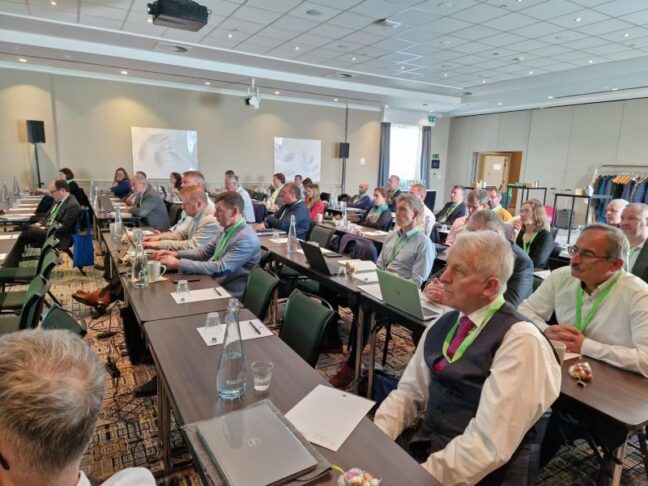
EIGA's Summer Summit will take place from 28 till 31 May 2025. Industry Leaders will gather in Edinburgh to plan the year ahead for the Industrial Gases Sector. They will also celebrate the achievements of the industry with the Awards Ceremony.
|
|
|
|
Competitiveness of the sector |
|
|
|
European Parliament Resolution on Energy Intensive Industries
EP resolutions enable the Parliament to express its views on political processes, policies, and developments. The Parliament also uses them to scrutinise other EU institutions, including the European Council. Similar to Own-Initiative Reports (INI), Resolutions are non-binding but may call for action. Resolutions are more brief, general, and less detailed than INI Reports.
Probably inspired by the Draghi Report, the ITRE Committee (Committee on Industry, Research and Energy) has been working on a resolution on Energy Intensive Industries (EII).
In plenary session on 3 April, Members of the European Parliament (MEPs) adopted by a show of hands the resolution: https://www.europarl.europa.eu/doceo/document/TA-10-2025-0065_EN.pdf
Main elements in the resolution:
- Energy prices – stresses the need to implement the Electricity Market Design (EMD), especially promoting Power Purchase Agreements (PPAs) and contracts
for difference (CfDs) to stabilize and lower energy costs for companies. Critically, it also calls on the Commission to assess any existing barriers to long-term agreements and, if any, explore additional ways to decouple fossil fuel prices from electricity prices in the framework of EMD.
- Permitting bottleneck – stresses that long permitting procedures undermine the business case to invest in Europe and calls on Member States to simplify permitting processes and facilitate grid connections.
- Clean tech – stresses the need to support the adoption of clean technologies (CO₂ capture, utilization, and storage (CCUS), green hydrogen, etc). For this, it calls on earmarking ETS revenues in support of decarbonization investments as well as more agile State Aid procedures.
- Financing – proposes to reprogram unspent NGEU funds from Members States under the current multiannual financial framework (MFF) to secure investments in EU’s strategic priorities, especially supporting EIIs’ transition. It also highlights the need for private investments and for a Capital Markets Union.
- Effective implementation of Carbon Border Adjustment Mechanism (CBAM) – calls on monitoring impacts of the phase out of Emissions Trading System (ETS) free allowances on EU EIIs and to assess circumvention risks. It further stresses the need for a WTO-compatible solution for EU exports.
- Green lead markets – calls on the creation of green lead markets for EU products and enhance the marketability of such products (e.g., by including sustainability, resilience and non-price criteria in EU public procurement, use of labelling schemes, etc.).
The text mentions "carbon capture and storage, and low-carbon hydrogen" among the "clean and net-zero [emission] technologies" whose use by energy-intensive industries the Commission should support.
It also highlights the "essential role" of CCUS methods "in the decarbonization of sectors where emissions are difficult to control and in the production [...] of low-carbon hydrogen."
|
|
|
|
Meeting of the National Associations
EIGA has over 20 Working Groups, so it is not easy to keep track of their complex and numerous items of work!
This is why our National Associations meet once a year the Working Group chairs.
An opportunity to exchange, align, identify gaps, better understand some topics.
After this joint meeting on 1 April, the National Associations exchanged the next day on their common topics, for instance nitrous oxide.
|
|
|
|
BN 32/25 - EIGA Position on Asbestos Communication and Labelling Duties for Dissolved Acetylene DA Cylinders
(EIGA Members' area)
The document gives background about the asbestos restriction, the exemption for acetylene cylinders and the requirements for labelling.
|
|
|
|
BN 33/25 - Cyber Security Basics
(EIGA Members' area)
Good IT Security is good Cyber Security.
For some sites (for example, some SEVESO-scope sites), cyber-security good practice may be compelled by regulatory requirements.
|
|
|
|
Doc 107/25 - Guidelines on Environmental Management Systems
(Revision of Doc 107/17)
This publication provides a guide to implementation of an environmental management system according to ISO 14001 - 2015 Environmental management systems - Requirements with guidance for use.
|
|
|
|
Doc 145/25 - Safe Use of Brazed Aluminium Heat Exchangers for Producing Pressurized Oxygen
(Harmonised publication)
(Revision of Doc 145/18)
This publication addresses Brazed Aluminium Heat Exchangers (BAHX) used for boiling product oxygen at elevated pressures. Because BAHX are one of the major components of an Air Separation Unit (ASU), industry guidance to assist designers and operators of ASUs is considered very important. This publication contains a summary of current knowledge and industrial practices used in the safe application of BAHXs for the boiling of oxygen at elevated pressures.
|
|
|
|
Doc 169/25 – Classification, and Labelling Guide in accordance with EC Regulation 1272/2008 (CLP Regulation)
EIGA Doc 169 known as the « Classification and Labelling Guide » is updated regularly in order to take into account the changes in the CLP Regulation and the changes in the classification of gases due to the REACH registration of substances that have occurred.
|
|
|
|
Doc 919/25 – Guidelines for the Preparation of Safety Data Sheets
(EIGA Members' area)
(Revision of Doc 919/24)
EIGA 919 “Guidelines for the preparation of Safety Data Sheets” known as the “SDS Guide” is updated regularly in order to take into account new data and new risk management measures submitted by gas producers during the REACH registration of gases and communicated in their revised SDSs. Changes in the library of phrases are highlighted in the document. National legislations are not considered in this document. References to national legislation should be added in the relevant sections of the SDS by the gas supplier, preferably in coordination with the other EIGA members in the relevant National Gas Association.
|
|
|
|
SI-HF 1/25 - Human Factors - "An Overview"
(Revision of SI-HF 1/17)
EIGA’s series of Human Factor Safety Information sheets are intended to explore Human Factors specific to the industrial gases industry, raise awareness on these issues, and provide guidance.
Human factors in the design and effectiveness of procedures focuses on what makes a procedure effective and on how writing and maintaining well designed procedures can ensure consistency and that everyone has the same basic level of information. They are a key element of a safety management system and an important training tool. Poor procedures can be a reason for people not following recommended actions. This Human Factors Safety Information sheet gives an overview of the various aspects to consider and provides an assessment checklist.
For some sites (for example, some SEVESO-scope sites), cyber-security good practice may be compelled by regulatory requirements.
|
|
|
|
SI-HF 2/25 - Individual - "Training and Competence"
(Revision of SI-HF 2/17)
EIGA’s series of Human Factor Safety Information sheets are intended to explore Human Factors specific to the industrial gases industry, raise awareness on these issues, and provide guidance.
Human factors in the design and effectiveness of procedures focuses on what makes a procedure effective and on how writing and maintaining well designed procedures can ensure consistency and that everyone has the same basic level of information. They are a key element of a safety management system and an important training tool. Poor procedures can be a reason for people not following recommended actions. This Human Factors Safety Information sheet gives an overview of the various aspects to consider and provides an assessment checklist.
For some sites (for example, some SEVESO-scope sites), cyber-security good practice may be compelled by regulatory requirements.
|
|
|
|
SI-HF 3/25 - Organisation - "Human Factors in Incident Investigation"
(Revision of SI-HF 3/17)
EIGA’s series of Human Factor Safety Information sheets are intended to explore Human Factors specific to the industrial gases industry, raise awareness on these issues, and provide guidance.
Human factors in the design and effectiveness of procedures focuses on what makes a procedure effective and on how writing and maintaining well designed procedures can ensure consistency and that everyone has the same basic level of information. They are a key element of a safety management system and an important training tool. Poor procedures can be a reason for people not following recommended actions. This Human Factors Safety Information sheet gives an overview of the various aspects to consider and provides an assessment checklist.
For some sites (for example, some SEVESO-scope sites), cyber-security good practice may be compelled by regulatory requirements.
|
|
|
|
SI-HF 4/25 - Task Factor "Design and Effectiveness of Procedures"
(Revision of SI-HF 4/17)
EIGA’s series of Human Factor Safety Information sheets are intended to explore Human Factors specific to the industrial gases industry, raise awareness on these issues, and provide guidance.
Human factors in the design and effectiveness of procedures focuses on what makes a procedure effective and on how writing and maintaining well designed procedures can ensure consistency and that everyone has the same basic level of information. They are a key element of a safety management system and an important training tool. Poor procedures can be a reason for people not following recommended actions. This Human Factors Safety Information sheet gives an overview of the various aspects to consider and provides an assessment checklist.
For some sites (for example, some SEVESO-scope sites), cyber-security good practice may be compelled by regulatory requirements.
|
|
|
|
SI-TS 8/25 - Compliance and Risk Monitoring of Transport Operations through Auditing
(Revision of SI-TS 8/17)
Road transportation is one of the highest risk activities in the Industrial and Medical Gases Industry. To provide management with a reliable and positive means for identifying levels of compliance with standards, regulations and procedures and potential unacceptable levels of risk from their transport operations a proactive monitoring process is required.
The most common methodology is a “Transport Safety/Compliance audit”, which can for example cover internal processes or contractor performance, but there are also other means such as regular analyses of tachograph and on-board computer data and spot checks; driver assessments.
Non-compliance with work instructions, operating standards, legislative requirements, rules and policies can create substandard conditions that increase the risk of incidents in the field of transport operations.
|
|
|
|
SL 4/25 - The Safe Transport, Use and Storage of Acetylene Cylinders
(Revision of SL 4/17)
The Safety Leaflet is intended to promote the safe transport, use and storage of acetylene cylinders. It gives guidance on all aspects related to these activities.
|
|
|
|
|