Insights about Industrial Gases in 2025 |
|
|
|
Highlights of WG activity since Jan 2020
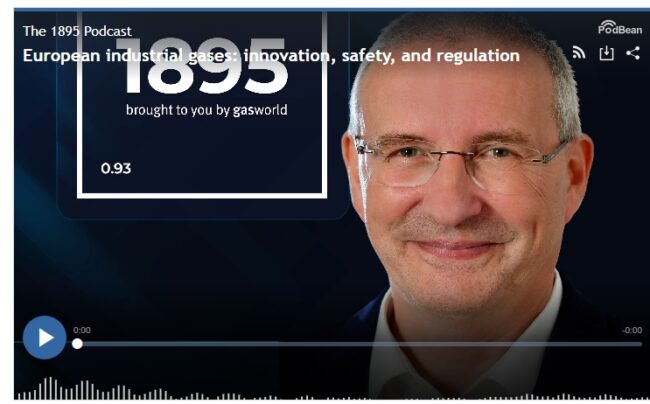
I had the honour to exchange on the evolving landscape of the European Industrial Gas sector with Gasworld:
📻 Listen to the podcast
|
|
|
|
Engaging with the European Parliament
Philippe Cornille and Sandrine Devos had the privilege to meet with two Members of the European Parliament.
The European Parliament is currently preparing a Resolution on Energy Intensive Industries.
EIGA has been engaging with the MEPs responsible for the Resolution, namely Wouter Beke (EPP, BE) and Brigitte van den Berg (Renew, NL), both shadow rapporteurs.
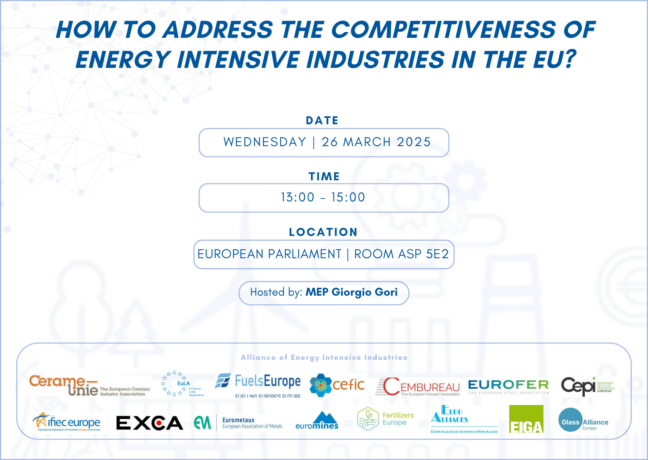
EIGA is also co-organising an event with the rapporteur, Giorgio Gori (S&D, IT).
|
|
|
|
Nomination of an EIGA Hydrogen expert as Vice-Chair H2 Production Committee
The international Hydrogen Production Committee meets twice a year with alternating in-person meetings in Europe & USA. They solely work on harmonised standards for hydrogen production.
Hydrogen is produced by our classic Steam Methane Reformers (SMR), using natural gas. Though more and more Proton Exchange Membrane (PEM) and Alkaline water Electrolysers are installed by the members.
This committee is also covering hydrogen liquefication and plans to widen their scope with carbon capture & storage.
In the international Hydrogen Production Committee of March25, they nominated Tonny Bremner (Linde – BOC Scotland) as vice-chair….congratulations Tony!
After 2 years, Tonny becomes Chair, meaning a 4-year commitment.
|
|
|
|
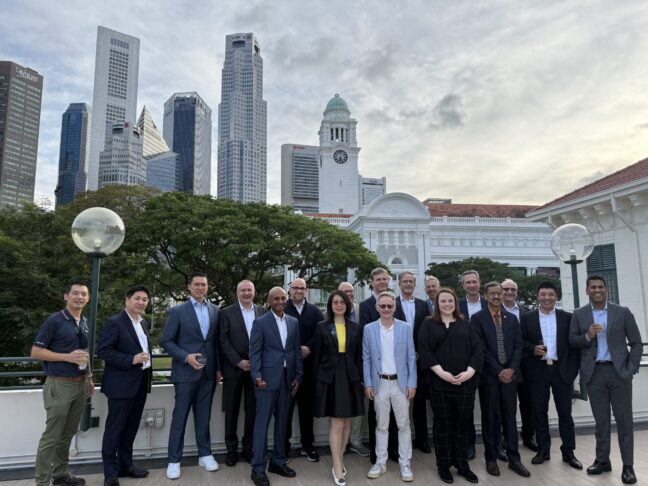
Global Observers greatly contribute to IHC#56
The International Harmonisation Council meets twice a year. This council is composed of the 4 regional associations EIGA, AIGA, CGA, JIMGA and the major member companies are represented by their Global Observers.
This council decides which industry standards are to be harmonised, i.e. to be applied at global scale, meaning that the document is identical in each region, except for local regulations and some references.
In the 56th meeting, hosted by Asia, several interesting topics were discussed, which have a global interest and impact on our industry.
The meeting was a success because our member companies provided useful comments to the standards under review and confirmed commitments in having their subject matter experts participating in the joint working groups, who review and finalise the documents’ publication.
Just a few examples of topics under discussion:
- Hydrogen Safety Distances
- PFAS
- Carbon capture
- Cleaning externally contaminated medical gas containers
- Safe handling of electronic specialty gases
- Hazop of ASU’s
Already more than 70 industry standards are harmonised...and more to come.
Sincere thanks to all IHC members.
|
|
|
|
International Hydrogen Production Committee
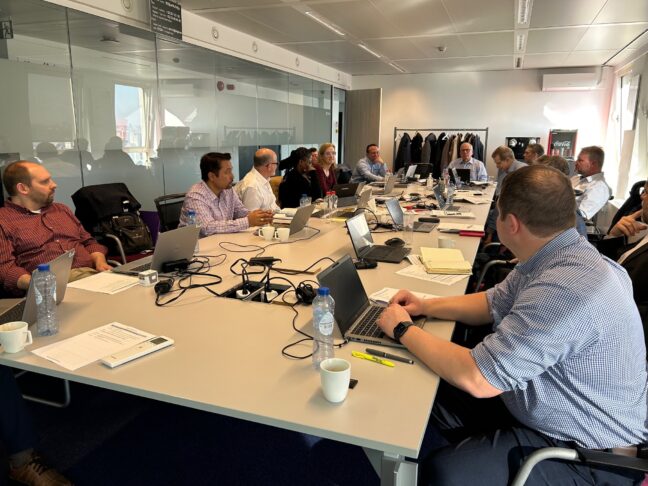
Over 3 days, EIGA hosted the International Hydrogen Production Committee and 2 other international working groups, on Hydrogen Liquefier Coldbox Enclosures and on Managing Oxygen Offtake from Electrolysers.
27 experts provided their expertise in drafting new standards, which will be valid globally in our industry. The standards we published are in support of our members but also serve as guidance to newcomers in the hydrogen economy.
All our members together have several hundreds of years of experience in safe producing, purifying, storing, and transporting gaseous and liquid hydrogen.
EIGA provides these standards free to download from our website....have a look in our library of publications, and you will be surprised of the extent and detail in these documents.
|
|
|
|
Doc 60/25 - Seveso Documents - Guidance on Applicability, Assessment and Legal Documents for Demonstrating Compliance of Industrial Gases Facilities with Directive 2012/18/EU "Seveso Directive"
The Seveso Directives are intended to prevent major accidents to people or the environment. For all “establishments” coming into scope there is a general obligation to “take all measures necessary to prevent major accidents and to limit their consequences to people and the environment”. Subsequent requirements are designed to implement this objective and/or to assist the site operator to demonstrate their compliance to the satisfaction of the relevant Competent Authority. This EIGA guidance publication is intended to address Seveso compliance issues for industrial gases facilities which are subject to the requirements of the Seveso Directives. Typical facilities include air separation plants, acetylene production plants, cylinder transfilling plants and/or cylinder re-distribution facilities, where they have sufficient inventory of dangerous substances. This publication is primarily aimed at those responsible for making the assessments and developing the reports and documentation required for Seveso compliance.
|
|
|
|
Doc 60.1/25 - Seveso - List of Relevant Accidents and Incidents
The Seveso Directives are intended to prevent major accidents to people or the environment. For all “establishments” coming into scope there is a general obligation to “take all measures necessary to prevent major accidents and to limit their consequences to people and the environment”. Subsequent requirements are designed to implement this objective and/or to assist the site operator to demonstrate their compliance to the satisfaction of the relevant Competent Authority. This EIGA guidance publication is intended to address Seveso compliance issues for industrial gases facilities which are subject to the requirements of the Seveso Directives. Typical facilities include air separation plants, acetylene production plants, cylinder transfilling plants and/or cylinder re-distribution facilities, where they have sufficient inventory of dangerous substances. This publication is primarily aimed at those responsible for making the assessments and developing the reports and documentation required for Seveso compliance.
|
|
|
|
Doc 207/25 - Safe Operation and Maintenance of Furnaces Insulated with Refractory Ceramic Fibres (RCF)
(Revision of Doc 207/17)
This publication describes best practices of EIGA members for the protection of their workers during operation of any fired heater where Refractory Ceramic Fibres (RCFs) are used, including Steam Methane Reformer furnaces. The best practices described in this document were developed for RCFs but can also be applied to other high temperature insulation wools.
|
|
|
|
SA 5/25 - Disguised Transportable Gas Cylinders
(EIGA Members’ area)
(Revision of SA 5/21) Still cases of modified markings or other misuse of cylinders are being reported to EIGA. The Safety Advisory Council reminds all member companies to take care on the pre-filling checks in the cylinder filling stations.
|
|
|
|
SL 8/25 - Safe Transport of Gases
(Revision of SL 8/17)
Every year many incidents occur during transportation of gas cylinders or cryogenic receptacles in inappropriate vehicles. Unfortunately, this frequently results in severe incidents. Many of these could have been avoided if basic safety rules had been followed.
EIGA has developed a serious of publications aimed at helping customers to transport gases and Dry Ice more safely in "non dedicated" vehicles.
This Safety Leaflet is intended to be shared with customers collecting cylinders or cryogenic receptacles from sites or retail centres. The leaflets explain the safety hazards and then describe the basic precautions to be taken to stay safe.
|
|
|
|
TP 2/25 - ASU Plants Environmental Issues
(EIGA Members’ area)
(Revision of TP 2/17) EIGA publication Doc 94 Environmental Impacts of Air Separation Units details the environmental impacts of air separation units (ASU) and gives guidelines on how to reduce the impacts. It is intended to serve as a guide to assist in putting in place a formal environmental management system…
|
|
|
|
TP INC 57/25 - Recent Incidents in the Industrial and Medical Gases Industry (SAC 181)
At each meeting of the EIGA Safety Advisory Council (SAC), the members exchange information on gas industry related incidents (accidents causing injuries, property or environmental damage and near-misses). SAC discusses and analyses these incidents. This information is used by SAC to determine the priorities for safety alerts, safety information, new and revised documents, campaigns etc.…
|
|
|
|
|